



Crown molding traditionally serves as a decorative transition between walls and ceilings, often painted a contrasting color (typically white) to highlight architectural detail. However, a growing trend in interior design is to paint crown molding the same color as the walls. This seemingly simple choice can dramatically alter the visual effects of a room, offering a modern, minimalist, and often more expansive aesthetic. Understanding the pros, cons, and visual impacts of this strategy is key to deciding if it’s the right approach for your space.
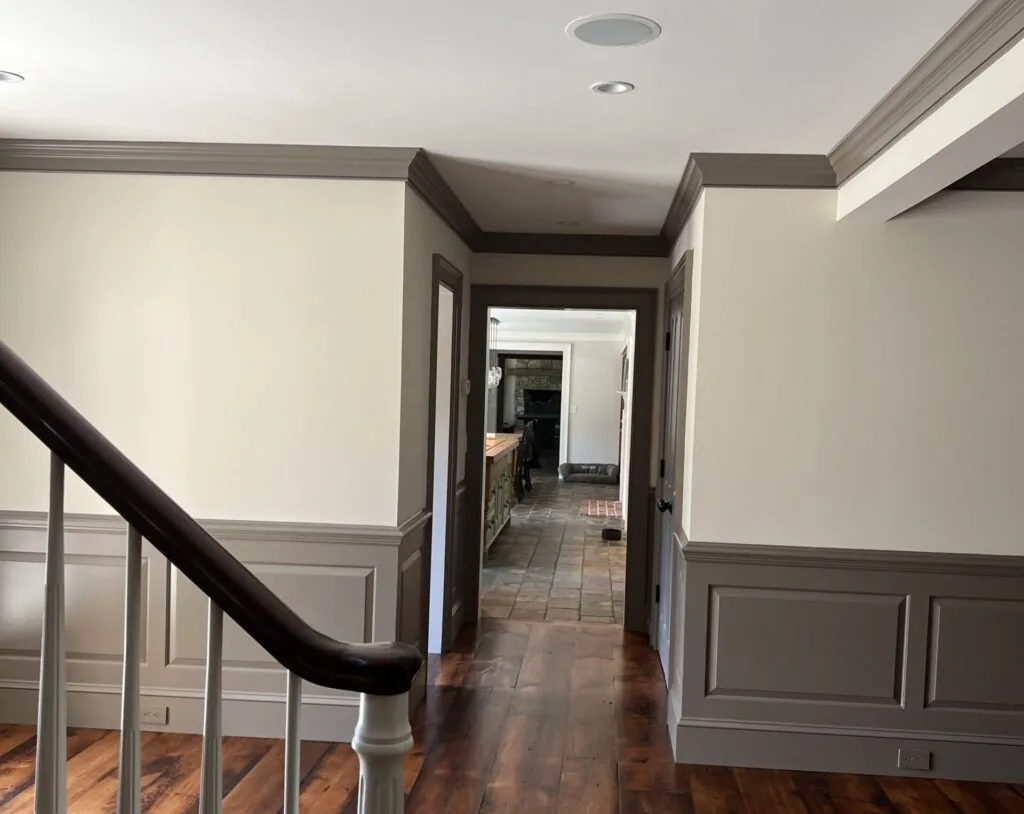
Benefits of seamless color: Height illusion & minimalism
Painting crown molding the same color as your walls offers several compelling visual and design advantages, particularly for creating a sense of spaciousness and modern simplicity.
- Height Illusion: When crown molding is painted the same color as the walls, it visually extends the wall upwards, making the ceiling appear higher than it actually is. This is because the eye travels uninterrupted from the wall to the ceiling line, creating a seamless vertical plane. This effect is especially beneficial in rooms with standard or lower ceiling heights, as it tricks the eye into perceiving more vertical space.
- Modern and Minimalist Aesthetic: This approach aligns perfectly with contemporary and minimalist design styles. It reduces visual clutter and creates a clean, understated look. Instead of highlighting the molding as a separate architectural feature, it integrates it into the wall, emphasizing simplicity and clean lines.
- Cohesive and Unified Look: A single color across walls and molding creates a harmonious and unified backdrop for furniture, art, and decor. It allows other elements in the room to become the focal points, rather than the architectural trim.
- Softer Transition: It provides a softer, less abrupt transition between walls and ceilings compared to a stark white contrast, contributing to a more calming and sophisticated atmosphere.
- Simplified Painting: While the molding still requires careful cutting, painting it the same color as the walls can simplify the overall painting process by eliminating the need for precise color changes at the trim line, potentially saving time and effort.
When color variation enhances architectural detail
While a seamless color offers many benefits, there are specific scenarios where painting crown molding a contrasting color is still the preferred choice, particularly to emphasize architectural detail.
- Highlighting Intricate Molding: If your crown molding features intricate carvings, multiple layers, or a particularly ornate design, painting it a contrasting color (typically white or a lighter shade than the wall) will draw attention to these details. This is ideal for traditional, classical, or Victorian homes where such architectural elements are meant to be showcased.
- Defining Room Boundaries: A contrasting crown molding clearly defines the boundary between the wall and the ceiling. This can be desirable in large, open-concept spaces where you want to visually break up expansive walls or add a sense of structure.
- Adding Visual Interest: In rooms with very plain walls or minimal decor, a contrasting crown molding can add an extra layer of visual interest and architectural character, preventing the space from feeling too bland.
- Traditional Aesthetic: For homes with a strong traditional, colonial, or classical design, a contrasting white or off-white crown molding is often expected and contributes to the authentic period feel.
- Creating a “Picture Frame” Effect: When paired with contrasting baseboards and door/window casings, a contrasting crown molding can create a “picture frame” effect around the room, adding depth and formality.
- Balancing Dark Walls: If you have very dark or bold wall colors, a crisp white crown molding can provide a visual break, preventing the room from feeling too enclosed or heavy.
Finish choices: Semi-gloss crown vs. Matte walls
Even when painting crown molding the same color as the walls, varying the paint finish is a common and effective technique to add subtle definition and enhance durability.
- Matte/Flat Walls:
- Characteristics: These finishes absorb light, providing a soft, non-reflective appearance that helps hide imperfections on walls.
- Best For: Most wall surfaces where you want a subtle, sophisticated look.
- Semi-Gloss Crown Molding:
- Characteristics: Semi-gloss finishes have a noticeable sheen that reflects light. They are more durable and easier to clean than matte finishes.
- Why it works (same color as wall): Even if the color is identical, the difference in sheen between a matte wall and a semi-gloss crown molding will create a subtle, elegant contrast. The light reflecting off the semi-gloss molding will highlight its form, providing definition without a stark color break. This gives a sophisticated, layered look.
- Benefits: The higher sheen on the molding makes it more resistant to scuffs, fingerprints, and general wear and tear, and it’s easier to wipe clean, which is practical for trim.
- Satin/Eggshell Crown Molding:
- Characteristics: These finishes offer a slight sheen, more durable than matte but less reflective than semi-gloss.
- Why it works (same color as wall): For a very subtle transition, using a satin or eggshell finish on the crown molding (when walls are matte) provides just enough difference in reflectivity to define the molding without drawing significant attention to it.
- Full Gloss (Less Common for Crown):
- Characteristics: Highly reflective, very durable, and easy to clean.
- Why it works (same color as wall): Can create a dramatic, high-impact look, but it will also highlight every imperfection in the molding and the paint application. Generally reserved for very modern or avant-garde designs.
Recommendation: For a seamless yet defined look when painting crown molding the same color as the walls, use a matte or flat finish on the walls and a semi-gloss or satin finish on the crown molding. This subtle difference in sheen provides just enough visual interest and practical durability.
Design goals that benefit from one-color strategy
The decision to paint crown molding the same color as the walls is often driven by specific design objectives.
- Creating an Illusion of Height: As discussed, this strategy is ideal for rooms with lower ceilings (e.g., 8 feet or less) where you want to make the space feel taller and more expansive. The uninterrupted vertical flow draws the eye upwards.
- Achieving a Modern or Minimalist Aesthetic: For interiors that prioritize clean lines, simplicity, and a decluttered look, a one-color wall and molding approach supports this design philosophy. It allows furniture, art, and architectural forms to be the primary focus.
- Emphasizing Wall Color: If you’ve chosen a unique, rich, or deep wall color that you want to be the dominant feature, painting the crown molding the same color ensures that the wall color is fully appreciated without interruption.
- Softening Architectural Features: In homes where crown molding might feel too traditional or ornate for a desired contemporary feel, painting it to blend with the walls can soften its impact and modernize the space.
- Creating a “Cocoon” or Immersive Feel: For rooms where you want a cozy, enveloping atmosphere (e.g., a den, bedroom, or media room), painting walls and molding the same color can create a continuous, immersive environment, especially with darker hues.
- Simplifying Visuals in Small Spaces: In smaller rooms, too many contrasting lines can make the space feel busy and cramped. A monochromatic approach simplifies the visual elements, making the room feel more serene and spacious.
- Seamless Integration of Built-ins: If you have built-in shelving, cabinetry, or wainscoting that you want to blend seamlessly with the walls, extending the same paint color to the crown molding reinforces this integrated look.
Selio Painting Silva’s recommendations by room type
At Selio Painting Silva, we understand that every room has unique characteristics and design goals. Our expert recommendations for painting crown molding the same color as walls are tailored to maximize visual impact and functionality.
- Living Rooms & Dining Rooms:
- Recommendation: Often a great candidate for the one-color strategy, especially in modern or transitional homes. It creates a sophisticated, expansive feel that allows furniture and art to take center stage.
- Consideration: If the room is very large or has highly ornate, traditional molding, a subtle sheen difference (matte wall, semi-gloss molding) is recommended to maintain a touch of definition.
- Bedrooms:
- Recommendation: Highly effective in bedrooms to create a serene, calming, and enveloping atmosphere. It promotes a sense of tranquility and makes the space feel more restful.
- Consideration: This approach works particularly well with soft, muted colors or even darker, moody hues for a cozy “cocoon” effect.
- Hallways & Entryways:
- Recommendation: Excellent for making these often-narrow spaces feel taller and more open. The continuous color helps to streamline the visual flow, preventing the hallway from feeling chopped up.
- Consideration: In high-traffic areas, a more durable finish (like eggshell or satin) on the walls themselves might be considered, which would then blend even more seamlessly with a semi-gloss crown.
- Kitchens:
- Recommendation: Can work well in modern or minimalist kitchens, especially where cabinetry extends to the ceiling or if the kitchen is part of an open-concept space. It helps to maintain a clean, uncluttered aesthetic.
- Consideration: Ensure the chosen color complements your cabinetry and backsplash. The practical benefits of a more durable semi-gloss finish on the molding are particularly relevant in a kitchen environment.
- Bathrooms:
- Recommendation: Often beneficial in smaller bathrooms to maximize the perception of height and space. It contributes to a clean, spa-like atmosphere.
- Consideration: Use a paint specifically formulated for high-humidity environments (e.g., bathroom paint with mildew resistance) for both walls and molding.
At Selio Painting Silva, we provide personalized consultations to discuss your specific room, lighting, and design vision. We’ll help you determine if painting your crown molding the same color as your walls is the ideal choice to achieve your desired aesthetic and functional goals.
Ready to transform your home with expert interior painting? Selio Painting Silva specializes in creating stunning and cohesive interior spaces, offering professional guidance on color selection and flawless application. Contact us today for a free consultation and let’s bring your vision to life!