



A solid wood front door exudes warmth, elegance, and curb appeal, but the cost and maintenance can be prohibitive. For homeowners seeking the sophisticated look of natural timber without the expense or upkeep, a wood-look paint finish offers a remarkable alternative. This faux finishing technique can transform a plain metal or fiberglass door into a convincing replica of a rich, stained wood door, adding a touch of classic beauty and enhancing your home’s exterior aesthetic.
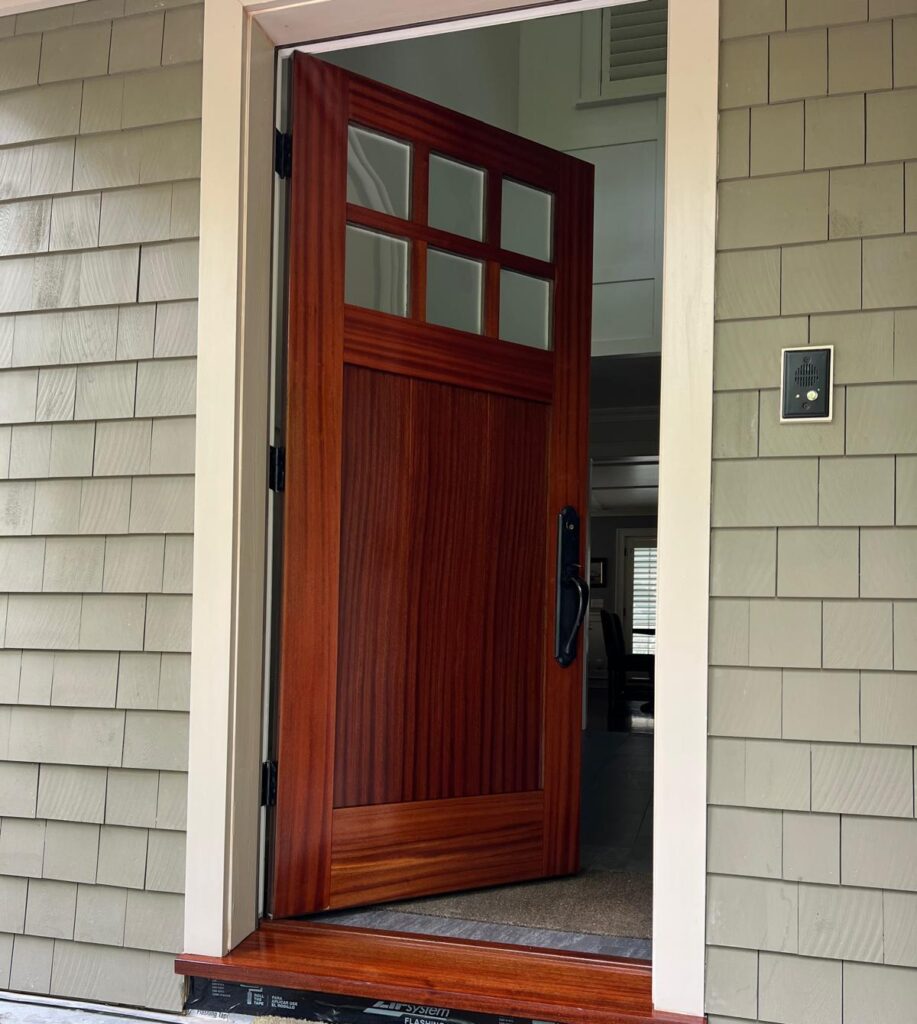
Staining vs. Faux timber paint techniques
While both staining and faux painting aim to mimic wood, their application and suitability for different door types vary significantly.
- Staining (for Real Wood Doors):
- Concept: Staining involves applying a translucent finish that penetrates the wood fibers, enhancing the natural grain and color of real wood.
- Application: Applied directly to bare or stripped wood doors. The stain soaks in, and excess is wiped off.
- Pros: Authentic look, highlights natural wood beauty.
- Cons: Only works on real wood; requires significant prep (sanding, stripping); ongoing maintenance (re-staining, sealing) is necessary to protect against weathering.
- Faux Timber Paint Techniques (for Metal, Fiberglass, or Previously Painted Doors):
- Concept: This technique uses paint to create the illusion of wood grain on a non-wood surface. It’s a multi-step process involving base coats, glaze, and specialized tools to simulate the texture and pattern of wood.
- Application:
- Preparation: Thorough cleaning, sanding, and priming of the door surface.
- Base Coat: Applying a solid base color that represents the lightest tone of the desired wood (e.g., a light tan or beige for oak, a reddish-brown for mahogany).
- Glaze Application: Applying a translucent, tinted glaze over the dry base coat. This is where the magic happens.
- Grain Creation: While the glaze is still wet, using specialized tools (wood graining tools, combs, brushes) to drag through the glaze, creating patterns that mimic wood grain.
- Top Coat: Applying a clear protective top coat.
- Pros: Achieves the look of wood on any smooth surface; highly customizable color and grain; lower maintenance than real wood; durable when properly sealed.
- Cons: Requires skill and practice to achieve a realistic effect; can be time-consuming.
Key Difference: Staining enhances existing wood; faux painting creates the look of wood where none exists. For metal or fiberglass doors, faux painting is the appropriate method.
Paint types & brushwork for realistic wood grain
Achieving a convincing wood-look finish relies heavily on the right paint products and skillful brushwork.
- Paint Types:
- Base Coat: Typically a high-quality exterior acrylic latex paint in a matte or eggshell finish. This provides the foundational color.
- Glaze: This is the most critical component. You’ll need a translucent, slow-drying glaze. You can either:
- Purchase a pre-tinted wood-graining glaze.
- Mix a clear glazing liquid with a small amount of exterior acrylic latex paint (in a darker, complementary wood tone) to create your custom tint. The slow drying time of the glaze allows time to work the graining tools.
- Top Coat: A clear, exterior-grade, UV-resistant polyurethane or acrylic top coat (varnish). This protects the faux finish from weather and wear. Choose a satin or semi-gloss finish for a natural wood sheen.
- Brushwork and Tools for Realistic Grain:
- Graining Tools: These are specialized rubber or silicone tools with patterns that mimic wood grain. They are dragged through the wet glaze to create the characteristic lines.
- Graining Combs: Used to create fine, parallel lines that resemble wood fibers.
- Dry Brushing: A technique where a nearly dry brush is used to lightly drag paint/glaze, creating subtle streaks that mimic natural wood variations.
- Flogging Brush: A specialized brush with long, stiff bristles used to create subtle texture and “pores” in the wet glaze.
- Feathering Brush: A soft, natural bristle brush used to soften and blend glaze, creating a more natural, less uniform look.
- Technique:
- Apply the glaze evenly over a small section of the door.
- While the glaze is wet, use your chosen graining tool. Drag it smoothly and consistently in the direction of the desired wood grain.
- Vary the pressure and angle slightly to create natural imperfections.
- Use a fine-bristle brush or a dry brush to add subtle knots, rings, or variations in the grain.
- Work in small, manageable sections to prevent the glaze from drying before you can create the grain.
Tip: Practice on a spare piece of material (e.g., plywood or cardboard) before working on the actual door to get a feel for the tools and techniques.
Protective top coats & UV-resistant finishes
The durability and longevity of your wood-look paint finish depend heavily on the protective top coat.
- Importance of a Top Coat:
- Protection from Elements: An exterior-grade top coat shields the faux finish from rain, snow, humidity, and temperature fluctuations, preventing chipping, peeling, and fading.
- UV Resistance: Crucial for front doors, especially those exposed to direct sunlight. UV inhibitors in the top coat prevent the faux finish from fading, yellowing, or degrading due to sun exposure.
- Enhanced Durability: Provides a hard, protective layer against scratches, scuffs, and daily wear and tear, ensuring the finish lasts for years.
- Desired Sheen: The top coat also provides the final sheen (matte, satin, semi-gloss) that mimics the look of sealed wood.
- Types of Protective Top Coats:
- Exterior-Grade Polyurethane: Offers excellent durability and UV resistance. Available in oil-based (more durable, slower drying, can yellow slightly over time) and water-based (faster drying, less yellowing, easier cleanup).
- Exterior-Grade Acrylic Varnish/Clear Coat: Often water-based, offering good UV resistance and flexibility. Less prone to yellowing than oil-based polyurethanes.
- Application:
- Ensure the faux finish (base coat and glaze) is completely dry and cured before applying the top coat.
- Apply multiple thin, even coats (typically 2-3 coats) of the top coat according to the manufacturer’s instructions.
- Lightly sand with very fine-grit sandpaper (e.g., 220-grit or higher) between coats for optimal adhesion and a smoother finish, wiping away all dust before the next coat.
- Maintenance: Even with a protective top coat, regular cleaning with mild soap and water will help maintain the finish. Inspect the door periodically for any signs of wear or damage to the top coat, especially in high-traffic or sun-exposed areas, and consider re-coating every few years as needed.
Color choices that pair with exterior schemes
The beauty of a wood-look paint finish is its versatility. You can customize the “wood” color to perfectly complement your home’s existing exterior scheme.
- Matching Architectural Style:
- Traditional/Colonial: Deeper, richer wood tones like mahogany, walnut, or dark cherry can add a classic, stately feel.
- Craftsman/Farmhouse: Medium-toned oaks, natural pines, or slightly distressed wood looks can enhance the rustic or handcrafted aesthetic.
- Modern/Contemporary: Sleek, darker woods like ebony or wenge, or very light, bleached wood tones can complement minimalist designs.
- Complementing Existing Exterior Colors:
- Warm House Colors (e.g., creams, tans, warm grays, earthy reds): Pair with warm-toned faux woods like oak, cherry, or mahogany. These will enhance the overall warmth and create a cohesive look.
- Cool House Colors (e.g., cool grays, blues, whites): Pair with cooler-toned faux woods like ash, white oak (with gray undertones), or even a very dark, almost black wood. This creates a sophisticated contrast.
- Brick or Stone: Identify the dominant colors and undertones in your brick or stone. Choose a faux wood color that pulls from these tones for a harmonious blend. For red brick, a deep mahogany or a rustic oak can be stunning. For gray stone, a cooler-toned wood or a dark, rich wood can work well.
- Trim and Accent Colors:
- Consider how the faux wood door will look against your existing trim (e.g., white, black, or a contrasting color).
- The hardware on the door (knobs, handles) should also complement the faux wood tone and the overall exterior scheme.
- Lighting: Observe how different “wood” colors appear on your door throughout the day, under various natural light conditions (sunny, cloudy) and with your exterior lighting. Colors can shift dramatically.
Tip: Collect paint swatches of your house color, trim, and potential faux wood base and glaze colors. Bring them outside and hold them against your door to visualize the combination before committing.
Selio Silva Painting’s handcrafted door finish options
At Selio Painting Silva, we understand that your front door is the focal point of your home’s exterior, and a custom finish can make a lasting impression. Our skilled artisans specialize in handcrafted faux timber paint techniques, offering an elegant and durable alternative to traditional wood doors.
- Personalized Consultation: We begin with a detailed consultation to understand your vision, your home’s architectural style, and your existing exterior color scheme. We’ll discuss the type of wood grain you prefer (e.g., oak, mahogany, walnut) and the desired color depth.
- Custom Color Matching: Our experts will work with you to select the perfect base color and glaze tints that complement your home’s exterior, ensuring a harmonious and sophisticated look. We can create samples on a small board for your approval.
- Artisanal Faux Finishing: Our painters are highly trained in advanced faux finishing techniques, using specialized tools and meticulous brushwork to create incredibly realistic wood grain patterns. Each door is a unique piece of art, hand-finished to achieve depth, texture, and natural variation that mimics real timber.
- Durable, UV-Resistant Finishes: We use only premium-grade exterior paints and clear top coats specifically formulated for maximum durability and UV resistance. This ensures your beautiful wood-look finish will withstand harsh weather conditions, resist fading, and maintain its elegance for years to come.
- Seamless Integration: We ensure the faux timber finish seamlessly integrates with your home’s existing trim, siding, and architectural features, enhancing overall curb appeal.
- Professional Preparation: Our process includes thorough surface preparation, ensuring optimal adhesion and a flawless foundation for the multi-layered faux finish.
With Selio Painting Silva, you can achieve the luxurious look of a custom wood door without the high cost or demanding maintenance. Let us transform your front entry into a stunning statement piece that welcomes you home.
Ready to elevate your home’s curb appeal with an elegant wood-look front door? Selio Painting Silva specializes in handcrafted faux finishes and expert exterior painting. Contact us today for a free consultation and let’s create a welcoming and beautiful entrance for your home!