



Crown molding on kitchen cabinets adds a refined, custom-built look, elevating the cabinetry to a more architectural feature. While often painted to match the cabinets for a seamless appearance, choosing a different color for the crown molding can create striking visual effects, add depth, and introduce a unique design element. This guide explores the benefits of contrasting crown molding, how to coordinate colors and finishes, and popular combinations to achieve a stylish and sophisticated kitchen.
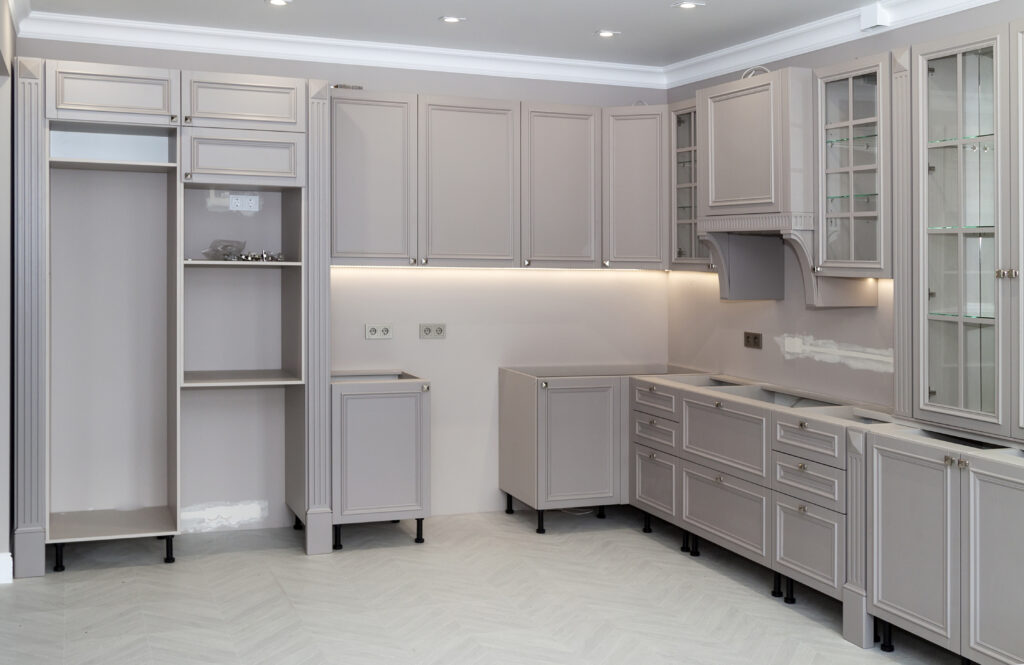
Why contrast works: Definition & visual framing
Painting crown molding a different color than the kitchen cabinets is a deliberate design choice that leverages contrast to achieve specific visual goals, influencing perception and highlighting design elements.
- Definition and Emphasis: When crown molding is painted a contrasting color, it immediately draws attention to itself. This effectively highlights the architectural detail of the molding, emphasizing its unique shape, size, and intricate profile. Instead of blending into the cabinets, the molding becomes a distinct design feature, allowing its craftsmanship to be appreciated. This is particularly effective for ornate or multi-layered crown molding, bringing its detail to the forefront.
- Visual Framing and Segmentation: A contrasting crown molding acts like a “frame” for the cabinetry, providing a clear visual boundary between the cabinets and the ceiling or wall above. This framing effect can make the entire cabinet run feel more substantial and intentional, giving it a bespoke, furniture-like quality. It also helps to visually “cap” the cabinetry, creating a sense of completion and order, especially in kitchens with varying cabinet heights.
- Adding Depth and Dimension: Different colors create visual layers. A contrasting molding introduces depth and dimension to the kitchen, preventing a long run of cabinetry from appearing flat or monolithic. This layering adds complexity and visual interest, making the space feel more sophisticated and thoughtfully designed. The play of light and shadow on the molding is also enhanced by the color difference.
- Breaking Up Monotony and Guiding the Eye: In kitchens with extensive cabinetry in a single color (e.g., all white or all dark wood), a contrasting crown molding can effectively break up the visual expanse. It provides a visual pause, preventing the space from feeling overwhelming or monotonous. This contrast can also subtly guide the eye around the room, highlighting the perimeter of the kitchen.
- Connecting Elements and Bridging Palettes: A contrasting crown molding can serve as a strategic bridge between the cabinet color and another element in the room. For instance, if your walls are a different color than your cabinets, the molding can match either the wall (extending the wall color upwards for height) or the cabinet (firmly defining the cabinet line). This helps to tie the overall design together, creating a cohesive, well-planned aesthetic.
- Influencing Perceived Height: If the crown molding extends to the ceiling and is painted a lighter color than the cabinets, it can visually extend the wall upwards, making the ceiling appear higher. Conversely, a darker molding can create a cozy, grounded feel, making a very tall kitchen feel more intimate.
Coordinating undertones between wall, cabinet & trim
Achieving a harmonious or intentionally dynamic look when using different colors for kitchen cabinets and crown molding largely depends on coordinating their subtle undertones with the surrounding walls and other trim elements.
- Understanding Undertones is Key: Every paint color, even seemingly neutral ones, possesses underlying warm (yellow, red, brown), cool (blue, green, purple), or true neutral undertones. These undertones become more apparent when colors are placed next to each other and under different lighting conditions.
- White Cabinets: White paints are notoriously complex. A “crisp white” might have cool gray or blue undertones, while an “off-white” might lean creamy or beige.
- Colored Cabinets: A “forest green” cabinet might have subtle blue or brown undertones. A “charcoal gray” could lean blue, green, or even purple.
- Crown Molding Color: The chosen paint for the molding will also carry its own undertones.
- Walls & Other Trim: Consider the undertones of your wall paint and any other trim (baseboards, door/window casings), as these should ideally maintain a consistent undertone family.
- Strategies for Undertone Coordination:
- Harmonious Pairing (Warm + Warm, Cool + Cool): The safest and most common approach is to align undertone families.
- Warm Palette: Pair warm-toned cabinets (e.g., creamy white, beige, natural warm wood) with a crown molding that also has warm undertones (e.g., a warm gray, a muted brown, or a slightly darker cream). This creates a cohesive, inviting, and cozy atmosphere.
- Cool Palette: Combine cool-toned cabinets (e.g., crisp white with gray/blue undertones, cool gray, deep navy) with a crown molding that shares cool undertones (e.g., a cool white, a lighter gray, or a subtle blue). This results in a sleek, contemporary, and often minimalist look.
- Pure Neutral as a Bridge: If one element (e.g., a very neutral wall color like a true greige or a pure white) is genuinely neutral, it can act as a bridge between elements that lean slightly warm and slightly cool, creating a balanced tension.
- Intentional Contrast (Eclectic/Bold Styles): In some eclectic or highly personalized designs, a subtle contrast in undertones can be used to add complexity and visual intrigue. For example, a warm white cabinet with a very light, cool gray molding could create a sophisticated tension. However, this requires a keen eye and careful testing to avoid an unintentional clash.
- Harmonious Pairing (Warm + Warm, Cool + Cool): The safest and most common approach is to align undertone families.
- Testing Undertones: To identify undertones, place a large sample of the paint color against a pure white piece of paper. The underlying hue will often become more apparent. Observe samples in various lighting conditions throughout the day.
Popular combinations: White cabinet + dark molding or vice versa
Exploring popular contrasting combinations can provide inspiration for your kitchen design, each offering a distinct aesthetic and feel.
- White Cabinets + Dark Crown Molding:
- Effect: This combination creates a dramatic, sophisticated, and visually grounded look. The dark molding acts as a strong visual cap, defining the top of the cabinetry and drawing the eye. It can make white cabinets feel more substantial and less ethereal, adding a sense of weight and permanence.
- Popular Dark Molding Colors:
- Matte Black or Deep Charcoal: For a modern, industrial, or bold contemporary aesthetic. Provides maximum contrast and a sharp, graphic line.
- Deep Navy or Forest Green: Adds a rich, moody, and sophisticated touch. These colors work exceptionally well if they are echoed elsewhere in the kitchen’s design, such as an island, backsplash, or accent decor, creating a cohesive palette.
- Dark Brown/Walnut Stain: If the cabinets are white but there are other natural wood elements (e.g., a wood island, open shelving, flooring), a dark stained wood molding can tie into those features, providing a warm, organic contrast.
- Best For: Homes seeking a high-contrast, modern, or classic look with a strong visual statement. It’s particularly effective in kitchens with higher ceilings where the dark molding can emphasize the architectural height.
- Dark Cabinets + Light Crown Molding:
- Effect: This combination brightens the upper portion of the kitchen, creating a sense of height and lightness above darker cabinetry. The light molding provides a crisp, elegant frame, preventing the dark cabinets from feeling too heavy or overwhelming the space.
- Popular Light Molding Colors:
- Crisp White: The most common choice. It provides a sharp, clean contrast that makes the dark cabinets pop and highlights the molding’s intricate detail. This is a timeless and versatile pairing.
- Cream or Off-White: For a softer, more traditional look, especially with warm-toned dark cabinets (e.g., dark wood, warm gray, or deep burgundy). It offers contrast without being as stark as pure white, creating a more inviting atmosphere.
- Light Gray: A subtle, sophisticated contrast that keeps the palette moody but adds definition. This works well with dark gray or black cabinets for a nuanced, monochromatic scheme.
- Best For: Homes with dark wood or painted dark cabinets (e.g., navy, charcoal, black, deep green) that want to prevent the kitchen from feeling too heavy or enclosed, or to visually lift the ceiling.
- Colored Cabinets + Neutral Molding:
- Effect: This strategy allows the colored cabinets to be the primary focal point and the star of the kitchen, while the neutral molding provides a clean, defining edge without competing for attention.
- Example: Sage green cabinets with crisp white or light gray crown molding. The green cabinets provide the color, and the neutral molding provides the architectural definition.
- Best For: When you want to introduce a significant amount of color through cabinetry but maintain a sense of balance, classic appeal, and a sophisticated backdrop.
Crown details: Semi-gloss mold vs. Matte cabinet faces
Even when using contrasting colors, varying the paint finish between the crown molding and the cabinet faces is a subtle yet powerful technique to enhance definition, durability, and visual sophistication.
- Cabinet Faces (Typically Satin, Eggshell, or Matte):
- Satin/Eggshell: These are the most common and recommended finishes for kitchen cabinet faces. They offer a subtle sheen that is durable, easy to clean, and hides minor imperfections well. They provide a soft, inviting, and approachable look that is less prone to showing fingerprints than higher sheens.
- Matte: Less common for cabinets due to cleaning concerns (as matte finishes are more porous and harder to wipe clean), but can be used for a very modern, velvety, and non-reflective aesthetic, particularly in low-traffic or highly stylized kitchens.
- Crown Molding (Typically Semi-Gloss):
- Semi-Gloss: This finish has a noticeable sheen that reflects light. It’s highly durable, very easy to clean (crucial for trim work that might be touched or accumulate dust), and effectively highlights architectural details by catching and reflecting light.
- Why it works with contrasting colors: The higher sheen of semi-gloss on the crown molding will catch and reflect light differently than the lower sheen of the cabinet faces. This difference in reflectivity creates a subtle yet distinct visual separation, making the molding “pop” even more against the cabinet, enhancing its definition and the overall polished look. This creates a sophisticated, layered effect, even if the color difference is minimal.
- Benefits: The increased durability and washability of semi-gloss are highly practical for trim, which is often touched, prone to scuffs, and can accumulate dust or grease in a kitchen environment.
- Satin Crown Molding (Alternative):
- If you prefer a slightly less reflective look than semi-gloss, or if your cabinets are painted in an eggshell finish and you want a more subtle sheen contrast, satin can also work for crown molding. It still offers more durability and sheen than a matte finish, providing a gentle luster.
- High-Gloss Crown Molding (Less Common):
- Characteristics: Very reflective, almost mirror-like. Extremely durable and easy to clean.
- Recommendation: Best for a very modern, dramatic, or avant-garde aesthetic. However, it will highlight every imperfection in the molding and the paint application, so meticulous surface preparation is absolutely critical. Less common for general crown molding due to its intensity.
- Consistency with Other Trim: Ideally, the sheen of your crown molding should match the sheen of other trim in your kitchen or adjacent open-concept spaces (e.g., baseboards, door/window casings). This creates a cohesive flow and a professional, well-designed aesthetic throughout your home.
Recommendation: For a classic and effective contrast that offers both visual appeal and practical durability, pair semi-gloss crown molding with satin or eggshell cabinet faces.
Selio Silva Painting’s approach for clean contrasted trim
Achieving crisp, clean lines and a flawless, durable finish when painting kitchen cabinets with contrasting crown molding requires specialized expertise and meticulous attention to detail. At Selio Painting Silva, our approach ensures stunning, professional results that elevate your kitchen’s design.
- In-Depth Color & Finish Consultation: We begin with a detailed discussion of your vision, your kitchen’s existing style, and the overall aesthetic you aim to achieve. We guide you through selecting the perfect contrasting colors and complementary finishes for both your cabinets and crown molding. This includes advising on undertone coordination, the impact of natural and artificial lighting, and providing large paint samples for on-site testing to ensure your complete satisfaction.
- Meticulous Surface Preparation – The Foundation of Excellence: We emphasize that the quality of your lines and the durability of the finish start long before the paint can is opened. Our team performs comprehensive preparation:
- Thorough Cleaning: All cabinet surfaces and crown molding are meticulously cleaned and degreased to remove any dust, grime, or cooking residue. We use appropriate cleaning agents to ensure optimal paint adhesion.
- Expert Repair & Smoothing: We expertly fill all nail holes, minor dents, and imperfections with professional-grade painter’s putty. All seams and gaps where the molding meets the cabinet, wall, or ceiling are precisely caulked with high-quality paintable caulk.
- Precise Sanding: A light, precise sanding follows to create an optimal “tooth” for paint adhesion and to smooth out any repaired areas, with all dust meticulously removed using tack cloths.
- Strategic Priming for Superior Adhesion & Color Uniformity: We apply a high-quality bonding primer to both the cabinets and the crown molding. This critical step ensures superior paint adhesion, blocks any potential stains or tannins from bleeding through, and provides a uniform, consistent base for the new paint colors, which is especially crucial when transitioning between different hues.
- Precision Taping and Comprehensive Protection: Achieving razor-sharp lines between contrasting colors is paramount. We use premium painter’s tape, meticulously applied and firmly pressed along all edges where the cabinet meets the molding, and where the molding meets the wall/ceiling. All surrounding surfaces (countertops, appliances, floors, walls/ceilings not being painted) are thoroughly masked and protected with drop cloths and plastic sheeting.
- Expert Paint Application – Flawless Finish:
- Dedicated Techniques: We utilize specialized techniques for cabinets (often sprayed for a factory-smooth, durable finish) and molding (brushed for precision and detail).
- Controlled Environment: We ensure proper ventilation and temperature control for optimal paint curing and finish quality, minimizing dust and ensuring a smooth application.
- Thin, Even Coats: Paint is applied in multiple thin, even coats to both cabinets and molding. This prevents drips and runs, ensures deep color saturation, and builds a durable, long-lasting finish. We adhere to manufacturer-recommended drying times between coats.
- Flawless Cutting-In: Our skilled painters execute cutting-in with exceptional precision, creating perfectly straight, razor-sharp lines where the contrasting colors meet. This expertise, combined with careful brush control, eliminates the need for excessive touch-ups.
- Careful Tape Removal & Quality Control: Tape is removed at the optimal time (when paint is tacky but not fully dry) to prevent paint tearing and ensure clean, crisp lines. After the paint is fully dry, we conduct a thorough final inspection, meticulously touching up any minor imperfections to deliver a truly flawless and high-end result that exceeds your expectations.
With Selio Painting Silva, your kitchen cabinets and contrasting crown molding will be transformed into a stunning focal point, executed with unparalleled craftsmanship and attention to detail, enhancing the beauty and value of your home.
Ready to elevate your kitchen with beautifully painted cabinets and contrasting crown molding? Selio Painting Silva specializes in expert interior painting, offering professional color consultation and flawless application for stunning kitchen transformations. Contact us today for a free consultation and let’s bring your vision to life!