



Interior doors, often overlooked, are powerful design elements that significantly impact the flow, style, and perceived spaciousness of your home. Far from being merely functional, their color choice can create subtle harmony or bold statements, tying together your home’s aesthetic. Deciding what color to paint your interior doors involves considering your overall design vision, the existing palette of your walls and trim, and the desired ambiance of each space.
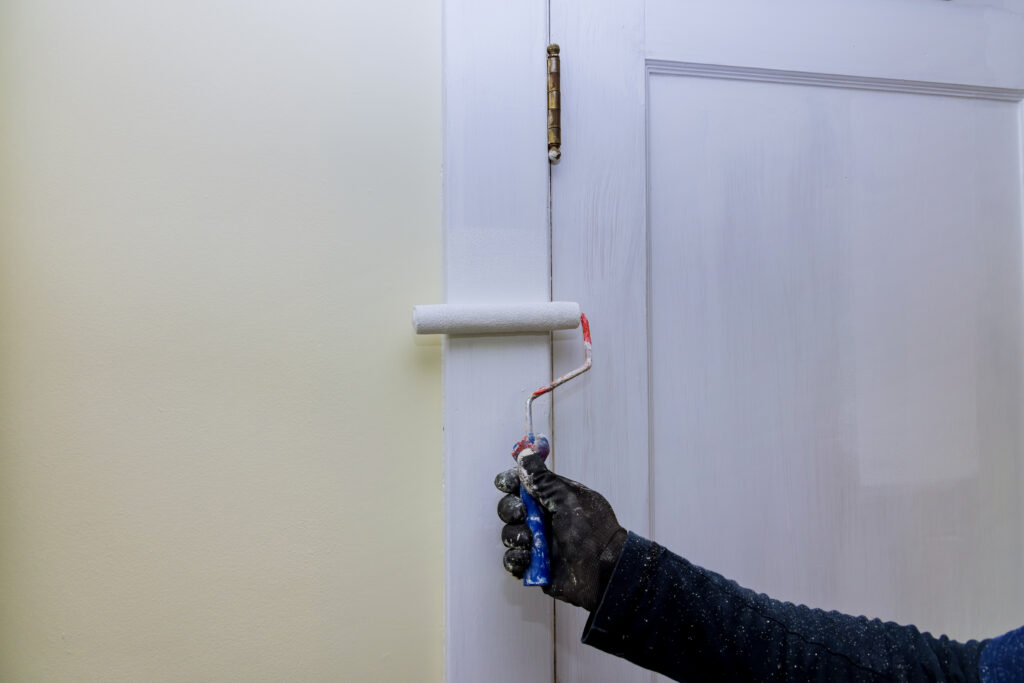
White & trim white vs. Contrast colors (black, sage, navy)
The most fundamental decision for interior door color is whether to blend them seamlessly with your trim or to use a contrasting shade that makes a statement.
- White & Trim White (Seamless Integration):
- Effect: This is the most classic and common choice. Painting doors the same white as your trim (and often the ceiling) creates a clean, continuous, and expansive look. It allows walls to be the primary color focus and makes rooms feel larger and brighter.
- Benefits:
- Visual Flow: Creates an uninterrupted visual flow, especially in open-concept homes, making spaces feel connected and calm.
- Maximizes Space: White reflects light, contributing to a brighter and seemingly larger interior.
- Timeless: A perennially popular choice that never goes out of style and offers versatility for future wall color changes.
- Highlights Architecture: Allows architectural details of the trim to stand out without competing with the door itself.
- Best For: Most home styles, especially traditional, transitional, modern farmhouse, and minimalist designs where a serene and airy atmosphere is desired.
- Contrast Colors (Black, Sage, Navy):
- Effect: Painting doors a contrasting color creates a focal point, adds depth, and injects personality into a space. It’s a bold design choice that can elevate a room from ordinary to extraordinary.
- Black Doors:
- Visual Effect: Creates a dramatic, sophisticated, and modern statement. Black doors can ground a space, add a touch of luxury, and provide a sharp contrast against lighter walls and trim. They draw the eye, making the door an architectural feature.
- Best For: Modern, industrial, contemporary, or even traditional homes seeking a bold, elegant edge. Pairs well with white or light gray walls.
- Sage Green Doors:
- Visual Effect: Offers a calm, natural, and inviting feel. Sage green is a versatile “green-neutral” that can bring a subtle touch of nature indoors, creating a serene and sophisticated ambiance.
- Best For: Farmhouse, Craftsman, traditional, or nature-inspired modern homes. Pairs beautifully with warm whites, creams, or light grays.
- Navy Blue Doors:
- Visual Effect: Conveys sophistication, stability, and a classic charm. Deep navy doors can add a moody, elegant touch and a sense of depth, especially against lighter walls.
- Best For: Traditional, coastal, colonial, or contemporary homes. Works exceptionally well with white or light gray walls.
Flat vs. Semi-gloss finish effects
The paint finish (sheen) you choose for your interior doors significantly impacts their appearance, durability, and how they interact with light.
- Flat/Matte Finish:
- Characteristics: Has virtually no sheen, absorbing light rather than reflecting it.
- Visual Effect: Creates a very modern, soft, and understated look. It can make a door feel more integrated with a matte wall, offering a seamless, almost invisible transition. It’s excellent at hiding surface imperfections.
- Pros: Contemporary aesthetic, hides flaws.
- Cons: Less durable, harder to clean (scuffs and fingerprints are more visible and harder to wipe off without damaging the finish), not ideal for high-traffic doors.
- Best For: Low-traffic doors, or when you want the door to truly disappear into the wall color for a minimalist effect.
- Satin Finish:
- Characteristics: Offers a soft, subtle luster, more sheen than flat but less than semi-gloss.
- Visual Effect: Provides a good balance of durability and aesthetic appeal. It’s more forgiving than semi-gloss in terms of hiding imperfections while still being easy to clean.
- Pros: Versatile, durable, easy to clean, soft sheen.
- Cons: Not as common for doors as semi-gloss, but a perfectly viable option.
- Best For: Homeowners who want a slight sheen without the formality of semi-gloss, offering a modern yet practical choice.
- Semi-Gloss Finish:
- Characteristics: Has a noticeable sheen that reflects light. This is the most popular and traditional choice for interior doors and trim.
- Visual Effect: Provides a crisp, clean, and polished look. The sheen highlights the architectural details of the door and trim, making them stand out. It contrasts beautifully with flatter wall finishes (matte, eggshell, or satin).
- Pros: Highly durable, very easy to clean (wipes down easily), resistant to scuffs and fingerprints, classic aesthetic.
- Cons: Can highlight surface imperfections more than lower sheens.
- Best For: Almost all interior doors, especially in high-traffic areas, and for creating a traditional, elegant, and practical finish.
Recommendation: For most interior doors, semi-gloss is the recommended finish due to its superior durability and ease of cleaning. If you prefer a slightly softer look, satin is a good alternative.
Consistency: All doors same shade vs. Accent doors
Deciding whether to paint all interior doors the same color or to introduce accent doors depends on your desired design impact and the layout of your home.
- All Doors Same Shade (Uniformity and Flow):
- Concept: Painting every interior door in your home (or at least within a single floor/zone) the exact same color.
- Effect: Creates a sense of visual continuity, calm, and cohesiveness. It allows the eye to flow smoothly through the space without interruption, making the home feel more unified and spacious. This is the most common approach for a traditional or seamless look.
- Best For: Open-concept homes, smaller homes where visual clutter should be minimized, or when you want a serene, understated backdrop that allows furniture, art, and wall colors to shine.
- Common Choices: White, off-white, or a light neutral that matches the trim.
- Accent Doors (Statement and Personality):
- Concept: Choosing a different, often bolder, color for specific interior doors to create a focal point or delineate a particular room.
- Effect: Adds personality, visual interest, and a touch of unexpected design. An accent door can draw attention to a specific room (e.g., a home office, a pantry, a powder room) or serve as a piece of art itself.
- Considerations:
- Strategic Placement: Best used sparingly and intentionally. Too many accent doors can make a home feel disjointed or chaotic.
- Color Harmony: The accent color should still harmonize with the overall palette of the surrounding hallway and the room it leads into. It can pull a color from artwork, furniture, or a rug.
- Architectural Style: Works well in eclectic, modern, or homes with distinct room functions.
- Best For:
- Powder Room Doors: A popular choice for a bold statement.
- Home Office Doors: To signify a distinct workspace.
- Pantry Doors: A fun way to add personality to a utility space.
- Bedroom Doors (less common): Can be done if the bedroom has a very strong, complementary color scheme.
Tip: If opting for accent doors, ensure the trim around the accent door still matches the general trim color of the house for consistency, letting the door itself be the pop of color.
Matching door color with trim and wall undertones
The most successful interior door color choices harmonize with your home’s existing wall and trim colors, especially concerning their subtle undertones.
- Identify Undertones:
- Walls: Even seemingly neutral wall colors (grays, beiges, whites) have undertones (warm: yellow, red, brown; cool: blue, green, purple).
- Trim: Your existing baseboards, window casings, and crown molding typically have a consistent white or off-white with specific undertones.
- Door Color: The chosen paint color for your door will also have its own undertones.
- Harmonize Undertones for Cohesion:
- Warm + Warm: If your walls and trim have warm undertones (e.g., creamy white trim, beige walls), choose a door color with warm undertones (e.g., a warm white, an olive green, or a deep burgundy). This creates a cozy, inviting, and cohesive atmosphere.
- Cool + Cool: If your walls and trim have cool undertones (e.g., crisp white trim, cool gray walls), opt for a door color with cool undertones (e.g., a cool white, a navy blue, or a charcoal gray). This results in a sleek, contemporary, and often minimalist look.
- Neutral as a Bridge: A true neutral white or gray (without strong warm or cool undertones) can sometimes act as a bridge between elements that lean slightly warm and slightly cool, but this requires careful testing.
- Consider the “Transition”:
- If your doors are painted a contrasting color to the walls, the trim around the door usually matches the general trim color of the house. This creates a frame for the door, allowing it to stand out while still being connected to the room’s overall trim scheme.
- Test, Test, Test: Always obtain large paint samples (or paint large swatches directly on the door) of your proposed door color. View them against your existing wall and trim colors in various lighting conditions (natural daylight, evening, overhead lighting) to see how the undertones truly interact. A color that looks perfect on a chip can appear very different on a large surface.
Selio Silva Painting’s interior door color consultations
Choosing the perfect interior door color is a nuanced decision that can significantly impact your home’s aesthetic. At Selio Silva Painting, we offer a specialized color consultation process to ensure your interior doors enhance your home’s beauty and flow seamlessly with your design vision.
- Understanding Your Home’s Style & Flow: We begin with a detailed discussion about your home’s overall architectural style, existing color palettes (walls, trim, flooring), and how you want each space to feel. We consider the natural light in each room and how it affects color perception.
- Exploring White & Neutral Options: For a classic and expansive feel, we guide you through various shades of white and off-white, helping you identify the perfect match for your existing trim and wall undertones. We discuss how different sheens will impact the final look.
- Introducing Accent Possibilities: If you’re considering a bolder statement, we explore trending and timeless accent colors like black, sage, or navy. We discuss strategic placement for accent doors to ensure they enhance, rather than disrupt, your home’s flow.
- On-Site Sample Visualization: We provide or guide you in creating large paint samples directly on your interior doors. This crucial step allows you to observe how the colors appear in your home’s unique lighting conditions, against your specific wall and trim colors, before making a final decision.
- Sheen Recommendations: We advise on the ideal paint finish (flat, satin, or semi-gloss) for each door, balancing aesthetics with durability and ease of maintenance, especially for high-traffic areas.
- Seamless Execution: Once your ideal colors and finishes are selected, our skilled painters ensure meticulous surface preparation and flawless application, resulting in crisp lines and a smooth, durable finish that elevates your home’s interior.
With Selio Silva Painting, your interior doors become an integral part of your home’s beautiful and cohesive design, executed with precision and care.
Ready to transform your home with expertly painted interior doors? Selio Silva Painting specializes in professional interior painting, offering personalized color consultations and flawless application for stunning and cohesive results. Contact us today for a free consultation and let’s bring your vision to life!