



Your front door is a focal point, the first impression of your home, and a crucial barrier against the elements. For wooden front doors, choosing the right paint is paramount not only for aesthetics but also for long-lasting protection. The ideal exterior wood paint must withstand harsh weather, UV radiation, and daily wear and tear while maintaining its vibrant color and smooth finish. This guide will delve into the essential factors for selecting durable and stylish paint options for your wooden front door, ensuring it remains beautiful and protected for years to come.
Why wood-specific paint matters for exterior doors
Painting a wooden front door isn’t just about color; it’s about protecting a dynamic, natural material from the rigors of the outdoors. Using paint specifically designed for exterior wood is crucial for several reasons:
- Wood’s Natural Movement: Wood is a hygroscopic material, meaning it naturally absorbs and releases moisture from the environment. This causes it to expand and contract with changes in humidity and temperature. Wood-specific exterior paints are formulated with greater flexibility to move with the wood, preventing cracking, peeling, and blistering that can occur with less flexible paints.
- Moisture Management: Exterior wood paints are designed to be breathable enough to allow trapped moisture vapor to escape from the wood (preventing rot and mildew) while simultaneously repelling liquid water from rain and humidity. They form a protective barrier against water penetration, which is critical for preventing swelling, warping, and rot.
- UV Resistance: Direct sunlight contains harmful UV rays that can break down paint pigments and binders, leading to color fading, chalking, and premature paint failure. High-quality exterior wood paints contain UV inhibitors and durable pigments that resist these effects, ensuring the color remains vibrant and true for longer.
- Adhesion and Durability: Wood surfaces can be challenging for paint adhesion, especially if they are old, weathered, or prone to tannin bleed. Exterior wood paints are formulated for superior adhesion to wood, creating a strong bond that resists chipping, flaking, and abrasion from daily use and weather exposure.
- Mildew and Fungal Resistance: Exterior paints often contain mildewcides and fungicides that inhibit the growth of mold, mildew, and other fungi, which thrive in damp outdoor environments and can cause discoloration and deterioration of the paint film.
- Tannin Bleed Control: Many wood species (especially redwood, cedar, and some oaks) contain natural tannins that can bleed through paint, causing yellowish or brownish stains. Wood-specific primers and paints are designed to block or encapsulate these tannins, ensuring a clean, uniform finish.
Oil-Based vs. Water-Based: Which lasts longer?
The long-standing debate between oil-based (alkyd) and water-based (latex/acrylic) paints for exterior wood doors has seen a significant shift in recent years.
- Oil-Based Paints (Alkyd):
- Characteristics: Traditionally known for their hard, durable finish and excellent leveling properties (minimal brush marks). They dry slowly, have strong odors, and require mineral spirits for cleanup.
- Durability on Wood: Historically, oil-based paints were considered superior for exterior wood due to their hardness and ability to penetrate the wood surface. They offer excellent adhesion and a very tough film.
- Cons: Tend to become brittle over time, making them prone to cracking and chipping as wood expands and contracts. They also yellow significantly with age and UV exposure, especially lighter colors. High VOCs (Volatile Organic Compounds) are a concern.
- Longevity: Can last long if the wood is stable, but their rigidity can lead to early failure on dynamic wood surfaces.
- Water-Based Paints (Acrylic Latex):
- Characteristics: Modern water-based paints, particularly 100% acrylic or acrylic-urethane blends, have revolutionized exterior painting. They dry quickly, have low VOCs, low odor, and clean up easily with water.
- Durability on Wood: This is where they now often outperform oil-based paints for exterior wood doors.
- Flexibility: Their primary advantage is superior flexibility. They can expand and contract with the wood without cracking or peeling, making them ideal for dynamic surfaces like doors.
- Color Retention: Excellent color retention and resistance to yellowing, even in direct sunlight.
- Mildew Resistance: Many formulations include enhanced mildew resistance.
- Cons: Can sometimes show brush marks if not applied carefully (though self-leveling formulas are improving).
- Longevity: High-quality acrylic-urethane exterior paints now offer excellent long-term durability and resistance to weathering, often lasting longer than oil-based paints on exterior wood due to their flexibility.
Conclusion: For most modern applications on exterior wooden front doors, high-quality 100% acrylic latex or acrylic-urethane paints are generally recommended over oil-based paints. Their superior flexibility, color retention, and environmental benefits make them the better long-term choice for a durable and beautiful finish.
Brands & technologies: Sherwin-Williams Emerald Urethane, Rust-Oleum Protective Enamel, Zinsser AllCoat
Choosing the right product from a reputable brand can make a significant difference in the longevity and appearance of your painted front door. Here are some top contenders:
- Sherwin-Williams Emerald Urethane Trim Enamel:
- Technology: This is a premium water-based (acrylic-urethane) enamel. The addition of urethane provides exceptional hardness, durability, and resistance to blocking (sticking) – crucial for doors and windows.
- Key Benefits:
- Superior Durability: Resists chipping, scratching, and marring, making it ideal for high-traffic doors.
- Excellent Flow and Leveling: Minimizes brush marks, creating a smooth, near-factory-like finish.
- Non-Yellowing: Maintains its true color over time, especially important for whites and light colors.
- Low VOC/Low Odor: More pleasant to work with.
- Flexibility: Moves with the wood, resisting cracking and peeling.
- Best For: Homeowners seeking a top-tier, long-lasting, and beautiful finish with minimal maintenance.
- Rust-Oleum Protective Enamel (Oil-Based):
- Technology: A classic, heavy-duty oil-based enamel.
- Key Benefits:
- Exceptional Hardness: Creates a very hard, chip-resistant finish.
- Rust Prevention: Excellent for metal components on the door or frame.
- Good Adhesion: Strong bond to properly prepared surfaces.
- Considerations: It’s oil-based, so it has strong fumes, longer dry times, and will yellow over time. Its rigidity can be a drawback on wood that experiences significant expansion/contraction.
- Best For: Situations where an extremely hard, traditional oil-based finish is specifically desired, or for metal elements on the door.
- Zinsser AllCoat Exterior (Water-Based):
- Technology: A high-performance, water-based paint that often functions as a self-priming paint, offering excellent adhesion and durability.
- Key Benefits:
- Excellent Adhesion: Can stick to many challenging surfaces without a dedicated primer (though priming is always recommended for bare wood or significant changes).
- Flexible and Durable: Resists cracking, blistering, and peeling.
- Mold and Mildew Resistant: Contains biocides to protect the paint film.
- Breathable: Allows moisture vapor to escape.
- Available in Various Sheens: Offers versatility in finish.
- Best For: A versatile, reliable option for exterior wood, especially where strong adhesion and weather resistance are priorities.
Note: Always check the specific product data sheet for application instructions, drying times, and recommended primers.
Primer recommendations: Stain-blocking & adhesion tips
Proper priming is a non-negotiable step for a durable and beautiful painted wooden front door, especially for exterior applications.
- Why Primer is Essential:
- Adhesion: Creates a strong bond between the wood and the topcoat, preventing peeling and chipping.
- Sealing: Seals the porous wood surface, ensuring uniform topcoat absorption and a smoother finish.
- Stain Blocking: Crucial for wood doors. It prevents natural wood tannins (especially from cedar, redwood, and some oaks) from bleeding through the topcoat and causing unsightly yellow or brown stains.
- Color Uniformity: Provides a consistent base color for the topcoat, ensuring the final paint color appears true and vibrant.
- Durability: Enhances the overall durability and longevity of the entire paint system.
- Recommended Primer Types:
- Oil-Based Stain-Blocking Primer:
- Why: Considered the gold standard for blocking tannins and providing excellent adhesion to bare or previously stained/oiled wood. The oil base effectively seals the wood and prevents bleed-through.
- Examples: Zinsser B-I-N Shellac-Based Primer (fast-drying, excellent stain blocker), Kilz Original Oil-Based Primer.
- Best For: Bare wood doors, especially cedar, redwood, or any wood known for tannin bleed. Also good for heavily stained or previously oiled doors.
- High-Quality Acrylic (Water-Based) Exterior Primer:
- Why: Modern acrylic primers offer excellent adhesion, flexibility, and good stain-blocking capabilities for less problematic woods. They are easier to clean up and have lower VOCs. Look for “bonding” or “stain-blocking” in the description.
- Examples: Sherwin-Williams Exterior Latex Wood Primer, Behr Premium Plus Exterior Multi-Surface Primer & Sealer.
- Best For: Previously painted wood doors in good condition, or new wood that is not highly prone to tannin bleed.
- Oil-Based Stain-Blocking Primer:
- Application Tips:
- Apply one thin, even coat of primer.
- Allow the primer to dry completely according to manufacturer instructions before applying the topcoat.
- Lightly sand the primed surface with 220-grit sandpaper and wipe clean with a tack cloth before painting for an even smoother finish.
Finish selection: Gloss, semi-gloss or satin for weather resistance
The sheen of your paint finish affects not only the door’s appearance but also its durability and ease of cleaning, especially for exterior exposure.
- Gloss Finish:
- Characteristics: Highest sheen, very reflective, almost mirror-like.
- Weather Resistance/Durability: Generally the most durable and weather-resistant finish. Its hard, smooth surface is highly resistant to abrasion, moisture penetration, and easy to clean. The high reflectivity can also offer some UV protection (though UV inhibitors in the paint itself are more critical).
- Aesthetic: Creates a dramatic, luxurious, and highly polished look. It makes colors appear richer and deeper.
- Considerations: Will highlight every imperfection (scratches, dents, brush marks) on the door’s surface, requiring meticulous preparation. Less common for general residential use due to its intensity.
- Best For: A bold, modern statement, or a very traditional, formal look where a high-end, reflective finish is desired.
- Semi-Gloss Finish:
- Characteristics: Noticeable sheen, reflects a good amount of light.
- Weather Resistance/Durability: Excellent durability and weather resistance, making it an ideal choice for exterior doors. It’s highly washable, resistant to scuffs, and provides good protection against moisture.
- Aesthetic: Creates a crisp, clean, and polished look. It offers a good balance between highlighting architectural details and being forgiving of minor imperfections. This is the most popular and recommended finish for front doors.
- Best For: Most home styles, offering a classic, elegant, and practical finish.
- Satin Finish:
- Characteristics: Softer sheen than semi-gloss, with a subtle luster.
- Weather Resistance/Durability: Good durability and weather resistance, though slightly less than semi-gloss. Still washable and resistant to general wear.
- Aesthetic: Offers a more understated, contemporary, and inviting feel. It’s more forgiving of surface imperfections than semi-gloss or gloss.
- Best For: Homeowners who want a less reflective look than semi-gloss but still need good protection and ease of cleaning.
Recommendation: For a balance of durability, weather resistance, and aesthetic appeal, semi-gloss is generally the top recommendation for exterior wooden front doors.
How Selio Silva Painting ensures long-lasting door finishes
At Selio Silva Painting, we treat your front door as a piece of art, ensuring its finish is not only beautiful but also exceptionally durable and long-lasting against the elements. Our meticulous workflow is designed to deliver a premium result.
- Comprehensive Door Assessment: We begin by thoroughly inspecting your door’s condition, identifying any existing damage, old paint issues, wood rot, or areas prone to wear. This informs our preparation strategy.
- Meticulous Hardware Removal: All hardware (doorknobs, knockers, mail slots, kick plates) is carefully removed to allow for a clean, uninterrupted painting surface and to prevent paint from getting on hardware.
- Expert Surface Preparation (The Foundation): This is our most critical step for longevity.
- Thorough Cleaning: The door is meticulously cleaned to remove all dirt, grime, grease, and mildew, ensuring optimal paint adhesion.
- Precise Repair: Any cracks, nail holes, or minor dents are expertly filled with exterior-grade wood filler. Loose or peeling paint is scraped and sanded smooth.
- Strategic Sanding: The entire door is sanded with appropriate grits (starting coarser if needed, finishing with fine grit) to create a perfectly smooth surface and an ideal “tooth” for the new paint. All sanding dust is meticulously removed with tack cloths.
- Premium Primer Application: We apply a high-quality, exterior-grade primer specifically chosen for your door’s wood type and existing condition. For bare wood or those prone to tannin bleed (like cedar or redwood), we use a stain-blocking, oil-based primer to prevent bleed-through and ensure superior adhesion. This provides a uniform, sealed base.
- Selection of High-Performance Paint: We use only top-tier exterior paints, such as Sherwin-Williams Emerald Urethane Trim Enamel or similar high-performance acrylic-urethane blends. These paints are selected for their:
- Exceptional Durability: Resistance to chipping, scratching, and marring.
- Flexibility: Ability to expand and contract with the wood without cracking or peeling.
- UV Resistance: Superior color retention and protection against fading.
- Mildew Resistance: Formulated to inhibit fungal growth.
- Multi-Coat, Precision Application: Our skilled painters apply two to three thin, even coats of paint. This multi-coat approach builds depth of color, ensures full opacity, and significantly enhances the paint’s protective qualities and longevity. We use professional brushes for a smooth, brush-mark-free finish.
- All Six Sides Sealed: Crucially, we ensure all six sides of the door (front, back, top, bottom, and side edges) are properly painted and sealed. This prevents moisture intrusion from any angle, which is vital for preventing warping, swelling, and premature paint failure.
- Careful Hardware Reinstallation & Final Inspection: Once the paint is fully cured, all hardware is carefully reinstalled. A thorough final inspection is conducted to ensure every detail meets our high standards of quality and your complete satisfaction.
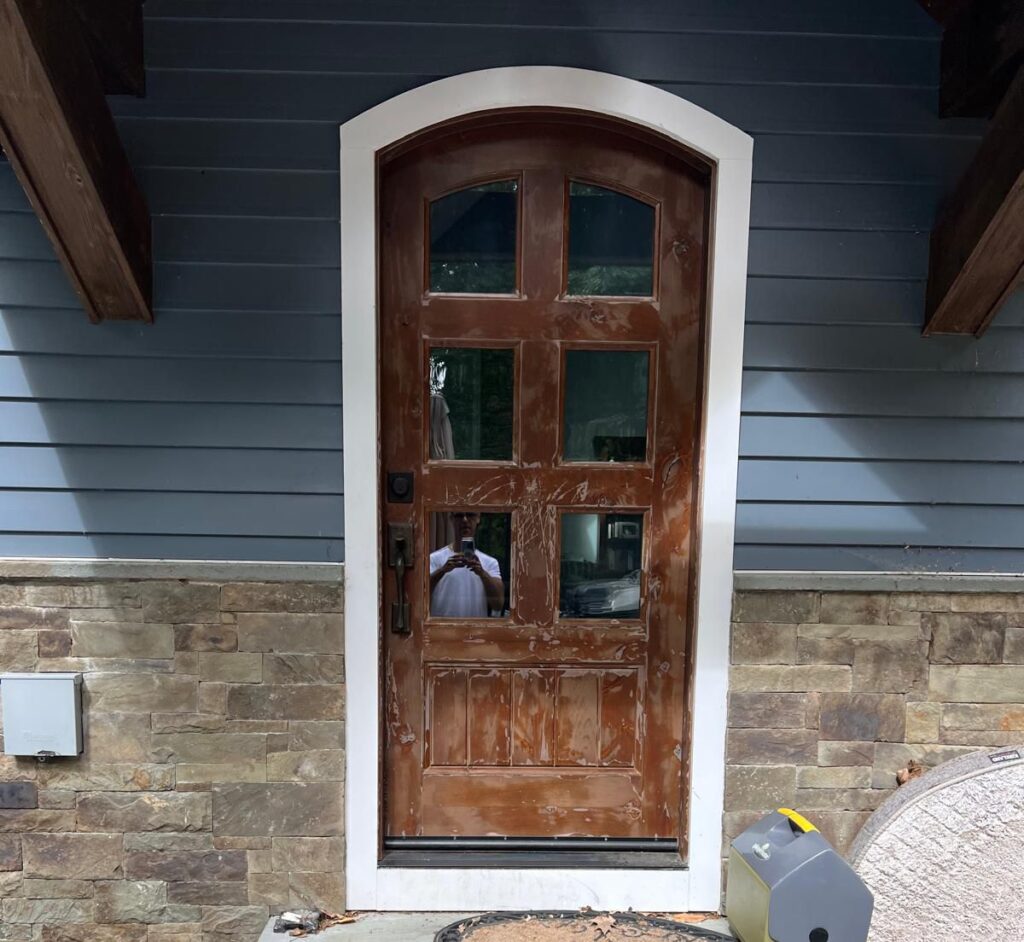
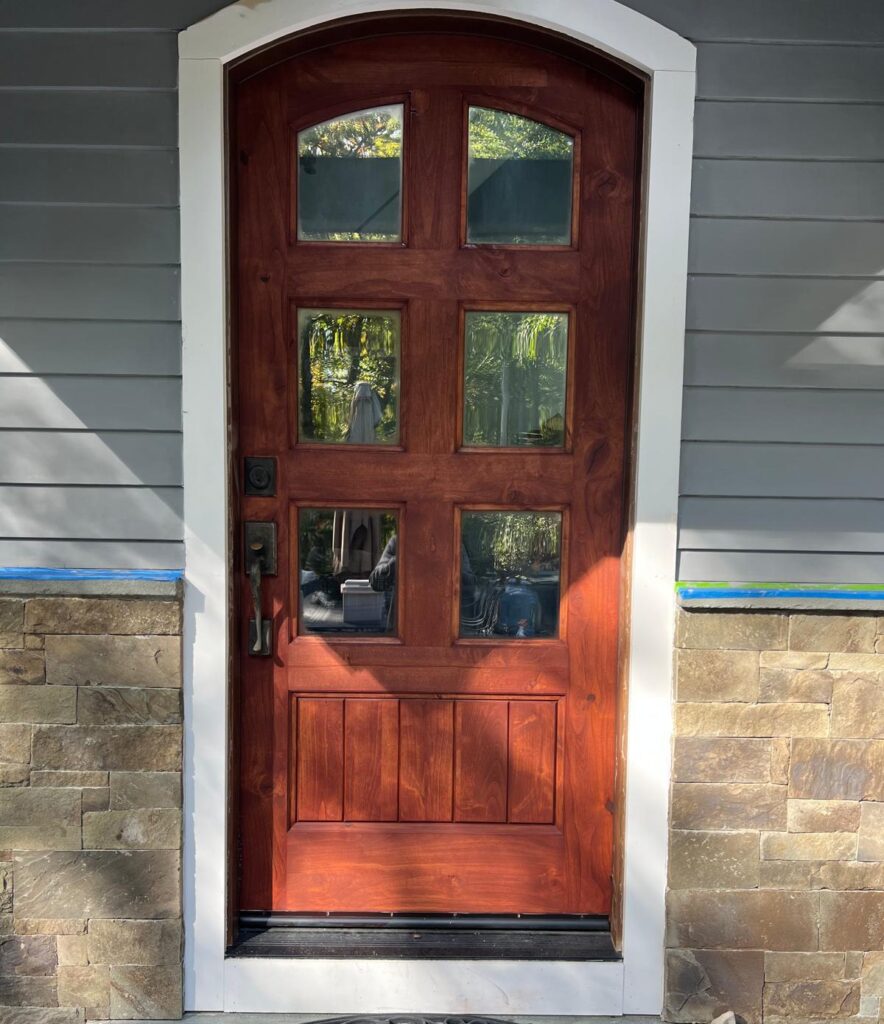
With Selio Silva Painting, your wooden front door receives a handcrafted finish that is not only visually stunning but also engineered for maximum protection and lasting beauty, welcoming you home for years to come.
Ready to give your wooden front door a durable, stylish, and long-lasting finish? Selio Silva Painting specializes in expert exterior painting, offering meticulous preparation, premium product selection, and flawless application for your home’s most important entryway. Contact us today for a free consultation and let’s bring your vision to life!