



Exterior painting projects are significantly influenced by environmental conditions, with temperature being one of the most critical factors. It’s not simply about choosing a sunny day; the ideal temperature range, humidity levels, and dew point all play a pivotal role in ensuring proper adhesion, smooth application, and long-term durability of the paint film. Painting outside these optimal conditions can lead to costly failures, from poor adhesion and uneven drying to premature peeling and blistering. Selio Silva Painting understands that successful exterior painting goes beyond color selection – it requires expert knowledge of climate conditions to deliver a flawless and lasting finish.
The success of your exterior paint job hinges significantly on temperature. Discover why ideal ranges are crucial, how humidity and dew point play a role, and common issues that arise when painting in less-than-optimal cold or hot weather.
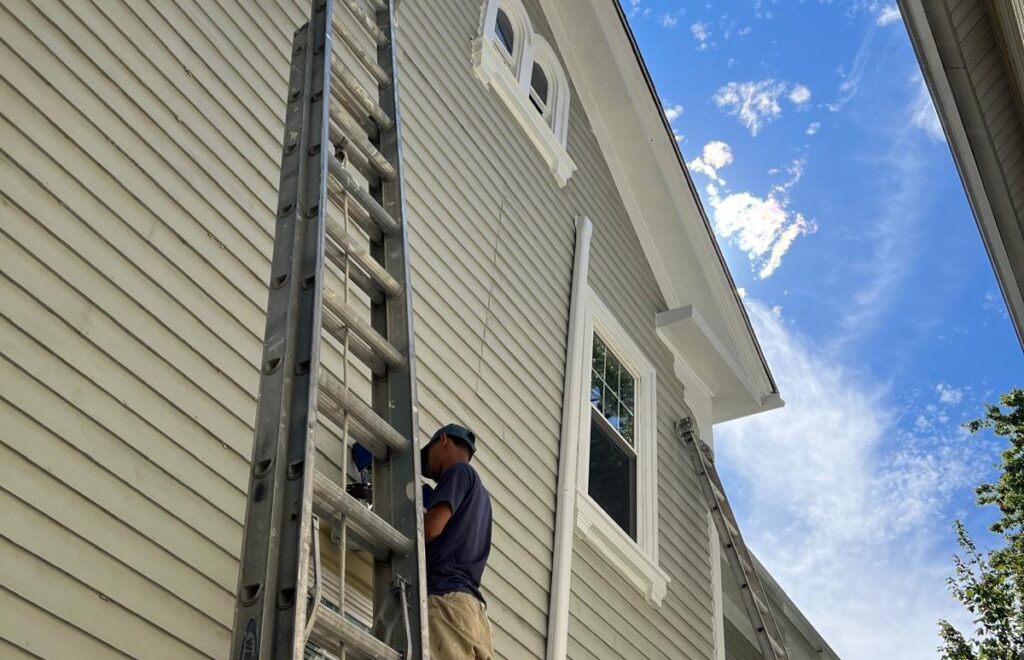
Why temperature matters in exterior paint application
Temperature profoundly impacts every stage of the exterior painting process, from application to long-term durability.
- Adhesion: Paint needs to flow and penetrate slightly into the surface to create a strong bond. If it’s too cold, paint becomes thick and tacky, reducing its ability to adhere properly. If it’s too hot, it dries too quickly, preventing proper bonding.
- Flow and Leveling: Paint needs to “flow out” evenly to create a smooth, uniform finish, hiding brush strokes and roller marks. Extreme temperatures can hinder this process, leading to uneven texture or visible application marks.
- Drying and Curing Times:
- Drying: This is when solvents evaporate (for oil-based) or water evaporates (for latex), allowing the paint to become dry to the touch.
- Curing: This is the slower, more critical process where the paint film hardens and achieves its full durability, adhesion, and protective properties. Curing can take days to weeks.
- Temperature directly affects the speed of both drying and curing. Too cold slows it down, too hot speeds it up excessively.
- Film Formation: Paint forms a continuous film as it dries. If temperatures are too low, the paint may not form a proper film, leading to a weak, brittle coating. If too high, the surface can skin over too quickly, trapping solvents/water beneath and causing blisters or poor adhesion.
- Moisture Management: Temperature interacts with humidity and dew point to determine if surfaces are dry enough to paint and if moisture will condense on the wet paint film.
Minimum and maximum temperatures by paint type
The ideal temperature range varies slightly depending on the type of exterior paint you are using. Always consult the paint manufacturer’s label for precise recommendations, as formulations can differ.
- Acrylic Latex Paints (Water-Based):
- General Range: Most standard acrylic latex exterior paints recommend application when air and surface temperatures are between 50°F (10°C) and 90°F (32°C).
- Low-Temperature Formulations: Some advanced acrylic latex paints are now specifically formulated for lower temperatures, down to 35°F (2°C). These are excellent for extending the painting season in cooler climates. Always check the label.
- Reasoning: Below minimum temperature, the water in the paint evaporates too slowly, hindering proper film formation and preventing the acrylic polymers from fusing together. Above maximum, water evaporates too fast, leading to quick surface drying (skinning) and poor adhesion.
- Oil-Based Paints (Alkyd):
- General Range: Typically prefer slightly warmer temperatures, often between 40°F (4°C) and 90°F (32°C). Some can tolerate slightly lower temperatures than standard latex.
- Reasoning: Oil-based paints rely on solvent evaporation and oxidation for drying and curing. Cold temperatures significantly slow down this chemical process, extending drying times dramatically and potentially leading to a soft, tacky film.
- Surface Temperature is Key: Remember, it’s not just the air temperature. The surface you are painting must also be within the recommended temperature range. Dark-colored surfaces in the sun can be much hotter than the ambient air temperature, while shaded surfaces can be cooler.
How humidity and dew point affect dry time
Beyond temperature, humidity and dew point are critical environmental factors that influence paint drying and curing.
- Humidity:
- High Humidity: Slows down the evaporation of water from latex paints and solvents from oil-based paints. This extends drying and curing times significantly. It increases the risk of dirt and bugs sticking to wet paint and can lead to paint film defects like blistering or sagging if recoated too soon.
- Low Humidity: Speeds up drying. While generally good, excessively low humidity combined with high temperatures can cause paint to dry too quickly on the surface, preventing proper leveling and adhesion (creating a “skin” that cracks later).
- Dew Point:
- Definition: The temperature at which air becomes saturated with moisture and condensation (dew) begins to form.
- Risk: If the surface temperature drops to or below the dew point while the paint is still drying or curing, condensation will form on the paint film. This moisture can ruin the paint’s adhesion, cause streaking, gloss loss, blushing, or even wash off uncured latex paint.
- Rule of Thumb: Always ensure the surface temperature is at least 5°F (3°C) above the dew point during application and for several hours after, especially overnight. Check local weather forecasts for dew point predictions.
Ideal Conditions: The sweet spot for exterior painting is typically a mild day with moderate temperatures (e.g., 60-80°F / 15-27°C), low to moderate humidity (e.g., 40-70%), and no rain expected.
Early morning vs Afternoon painting
The time of day you choose to paint can dramatically affect the outcome, especially on sunny or hot days.
- Early Morning Painting (Best Option for Many Situations):
- Pros: Surfaces are often cooler (especially after a cool night), allowing paint to dry at a more controlled rate, promoting better adhesion and leveling. You can follow the sun around the house, painting areas as they become shaded or as the surface temperature moderates.
- Cons: Risk of dew! Ensure surfaces are completely dry from morning dew before starting. Check that the surface temperature is above the dew point.
- Afternoon Painting (Use with Caution):
- Pros: Surfaces are generally warmer and often fully dry from morning dew.
- Cons: Surfaces in direct sun can become excessively hot, causing paint to dry too quickly, leading to brush marks, lap marks, or blistering. Painting too late in the afternoon risks paint not drying sufficiently before dew point temperatures are reached overnight.
- General Strategy:
- Follow the Shade: The best approach is to “follow the shade” around your house. Start on the side that is currently in shade in the morning and move to the next shaded side as the day progresses.
- Avoid Direct Hot Sun: Never paint directly into intense, scorching sunlight, especially on dark colors.
Paint curing issues in cold and hot weather
Improper curing due to extreme temperatures can lead to significant and costly long-term paint failures.
Issues in cold weather (below manufacturer’s minimum):
- Poor Adhesion: Paint doesn’t bond properly to the surface, leading to premature peeling and flaking.
- Incomplete Film Formation: Latex paint polymers may not fuse correctly, resulting in a weak, brittle, and non-protective film that chalks or erodes prematurely.
- Extended Drying/Curing Times: Paint remains tacky for days or weeks, attracting dirt, pollen, and insects. It’s also susceptible to moisture damage.
- Blushing/Streaking (for latex): Moisture trapped in the film due to slow evaporation can cause milky spots or streaks.
- Gloss Loss: The desired sheen may not develop fully.
- Molding/Mildew Growth: Prolonged wetness on the surface creates ideal conditions for mildew to grow before the paint can cure.
Issues in hot weather (above manufacturer’s maximum, especially in direct sun):
- Flash Drying/Lap Marks: Paint dries too quickly on the surface, preventing proper leveling. This leaves visible brush strokes, roller marks, and “lap lines” where wet and dry paint meet.
- Poor Adhesion/Blistering: The surface of the paint skins over before the solvents/water beneath can evaporate. This traps moisture/solvents, leading to bubbles (blisters) that eventually burst, leaving craters, or simply poor adhesion that peels.
- Reduced Open Time: Painters have less time to work with the paint, making it difficult to achieve a smooth, uniform coat.
- Cracking (especially on wood): Rapid drying can cause the paint film to shrink and crack, especially on wood substrates that are rapidly expanding/contracting with heat.
By meticulously monitoring temperature, humidity, and dew point, and adhering to expert application practices, you can ensure your exterior paint job achieves maximum beauty and longevity. Selio Silva Painting prides itself on its technical expertise, ensuring every exterior project is completed under optimal conditions for a flawless and durable finish.